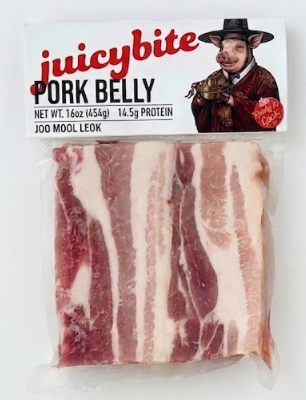
Pork Belly
Samgyeopsal
$7.99 / 16 oz (454g)
Thick-cut, crisp edges, rendered fat.
Sliced to an even 8 mm and sealed one meal at a time. Nothing to trim, nothing to portion. Eight minutes in a dry pan renders the fat and crisps the edges.
How to cook
- Pan — Dry pan, medium heat. 4 minutes per side until the edges brown and crisp.
- Air fryer — 400°F / 200°C for 8–10 minutes, flipping once.
- Serve — Cut into bite pieces with scissors. Lettuce, garlic, ssamjang.
Ingredients
Pork belly, salt, black pepper.
Nutrition
Per 4 oz — 340 cal, 26g fat, 0g carbs, 20g protein. PLACEHOLDER — confirm with the plant.
Singles ship inside a box.
Frozen shipping costs a lot, so everything goes out in one insulated box. Start with a box and this drops into the same delivery — no second shipping charge.
Start with a boxYou can add single packs from your cart once a box is in it.
- Ships frozen
- Dispatched in 24 hrs
- USDA & HACCP
Flavor profile
WHAT IS SAMGYEOPSAL?
Literally "three-layer flesh" — the belly cut where meat and fat alternate in bands. It is the single most-eaten pork cut in Korea, grilled at the table and wrapped in lettuce with garlic and soybean paste. Americans mostly meet this cut as bacon, cured and sliced thin. Uncured and cut thick, it behaves completely differently: the fat renders into the pan and bastes the meat as it goes.
100% Berkshire
If it doesn't say 100%, it isn't Kurobuta.
Most pork sold as "Berkshire" in the US is a cross. Berkshire bred into Duroc, or Berkshire somewhere in the parentage, and the label still gets to say the word. The marbling that made the breed famous gets diluted along the way.
Ours is 100% Berkshire. Not Berkshire-influenced, not a Berkshire cross. The Japanese call this breed Kurobuta, the black pig, and the reason they gave it its own name is that it does not cook like ordinary pork.
Read the label on anything else you are comparing. If the word 100% is missing, there is a reason it is missing.
Why the breed matters
Fat inside the meat, not just around it
Commodity pork has been bred lean for thirty years. It comes out pale, and it goes dry the moment you overshoot.
Berkshire runs the other way. Fine intramuscular fat threads through the muscle and melts at a lower temperature, so it bastes the meat from the inside as it cooks. That is the buttery finish people describe when they talk about Kurobuta, and it is why a Berkshire belly stays soft even when the edges go crisp.
Darker for a reason
Higher pH means it holds its juice
Berkshire pork measures a higher ultimate pH than standard crossbred pork, and pH is what governs how much water the muscle can hold. Higher pH, less cooking loss, less shrinkage in the pan.
You can see it before you cook it. The colour is deep pink to red rather than the washed-out pink of supermarket pork. That colour is the pH showing through, not a trick of the lighting.
Frozen once
Frozen once, at the plant, and never again
Pork loses more to thawing and refreezing than it does to freezing. Every cycle tears the muscle from the inside and the water runs out onto the tray.
Ours is blast frozen once, right after cutting, and stays frozen the whole way to your door. It does not sit in a retail case, does not get thawed for display, does not get refrozen when it doesn't sell.
The pork behind a butcher counter has usually travelled further at less stable temperatures than this has.
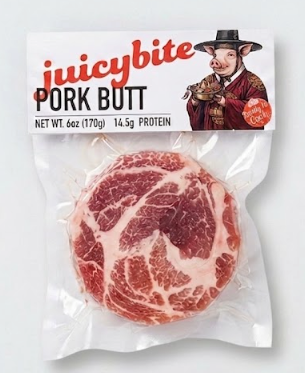
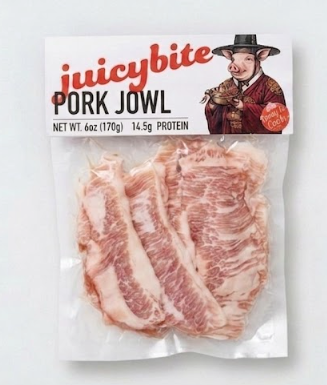
Belly · Butt · Jowl
| Product | Pork Belly, sliced |
|---|---|
| Breed | 100% Berkshire (Kurobuta) |
| Net weight | 16 oz (454g), 1 pack |
| Seasoning | None. Unseasoned, ready for the pan or the grill |
| Storage | Keep frozen (0F / -18C or below) |
| Use by | See date printed on back of package |
| Inspection | USDA Inspected |
| Distributed by | Korkio Company |